Running 100 kilometers isn’t just a feat of endurance — it’s a full-body, full-mind adventure that tests grit, preparation, and trust in the process. Whether it’s your first ultra or you’re leveling up from the 50K distance, this 16-week training plan will guide you to the finish line with structure, smart fueling, intentional recovery, and gear that won’t quit before you do.
Training Plan Overview
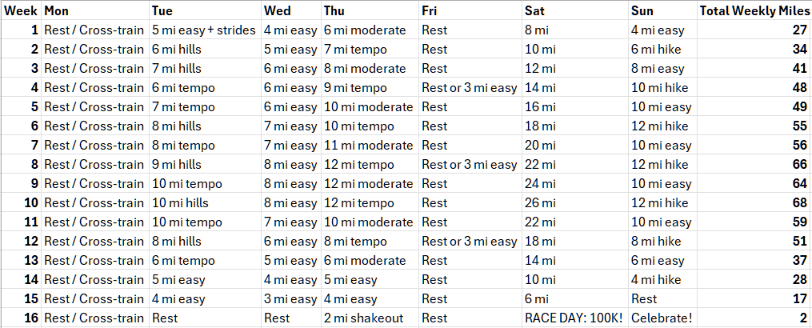
This plan assumes you’re comfortable running 25–30 miles per week and have a solid base. You’ll gradually increase volume and include back-to-back long runs, strength work, and recovery weeks.
Weekly Structure
- Mon – Rest or cross-train
- Tue – Speed or hill workout (6–10 miles)
- Wed – Easy run (5–8 miles)
- Thu – Medium-long run or tempo (8–12 miles)
- Fri – Rest or easy shakeout (optional)
- Sat – Long run
- Sun – Back-to-back long run or hike
Monthly Focus
- Weeks 1–4: Base building (30–45 mi/week)
- Weeks 5–8: Endurance + intensity (40–55 mi/week)
- Weeks 9–12: Peak mileage (55–65 mi/week)
- Weeks 13–15: Taper (reduce volume, maintain intensity)
- Week 16: Race week!
Fueling for the 100K Distance
Fueling isn’t just race-day strategy — it’s a key pillar of training.
During Long Runs and Race Day
- Carbs: Aim for 200–300 calories/hour (50–75g of carbs)
- Mix gels, chews, dates, PB&J, boiled potatoes, or sports drink.
- Practice eating every 30–45 minutes — train your gut!
Pre-Run
- Eat a carb-rich meal 2–3 hours before long runs: oatmeal, toast with nut butter, or a bagel with banana.
Post-Run Recovery
- Eat within 30–60 minutes: target carbs + protein (like a smoothie, tofu burrito, or chocolate soy milk and a banana).
- Hydrate with electrolytes (especially in hot weather).
Recovery Tips to Stay Strong
Training for 100K is as much about rest as it is about running.
- Sleep 7–9 hours/night — it’s when your body repairs.
- Foam roll and stretch after runs, especially during peak weeks.
- Schedule down weeks every 3–4 weeks to reduce mileage by 20–30%.
- Don’t ignore aches: tight calves and hip flexors today = injury tomorrow.
- Epsom salt baths, compression socks, and short walks can help sore legs recover faster.
Gear You’ll Want (and Actually Use)
You don’t need a gear closet full of shiny things — but a few quality essentials will make your 100K adventure way more comfortable.
Shoes
- Trail shoes with solid grip (e.g., Brooks Cascadia, Hoka Speedgoat)
- Rotate pairs if running high mileage
Hydration Pack
- At least 2L capacity with pockets for fuel, jacket, and phone
- Practice with it on long runs
Apparel
- Technical fabric that won’t chafe
- Gaiters (optional, but great for dusty/rocky trails)
Extras
- Headlamp (with backup batteries or charger)
- Body Glide or Trail Toes (prevent hot spots and blisters)
- Trekking poles (if your race has big climbs)
- A watch or app to track distance and elevation
Final Thoughts: Trust the Journey
You’ll have tired legs, early mornings, and runs that go better (or worse) than planned — but each one builds toward that moment when you cross the 100K finish line. Remember:
- Practice fueling on every long run
- Listen to your body
- Recovery is training
- Gear is your ally, not your distraction
- Keep showing up
You’ve got 16 weeks. Lace up, plan your long runs, and let the training transform you.
Ready to take the leap? Drop your questions in the comments or tag us in your training photos — we’d love to cheer you on.

 Magnolias + Fluff